
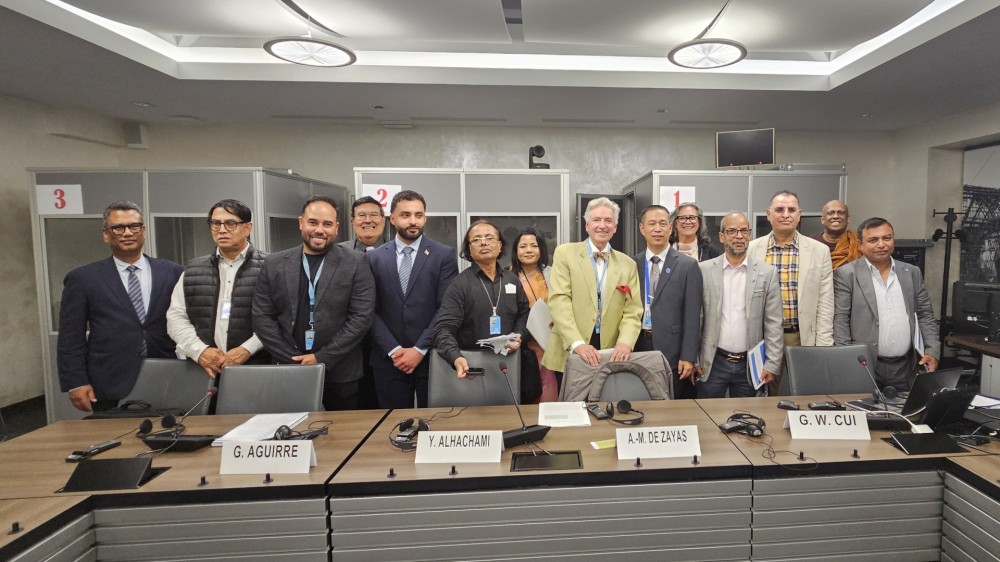
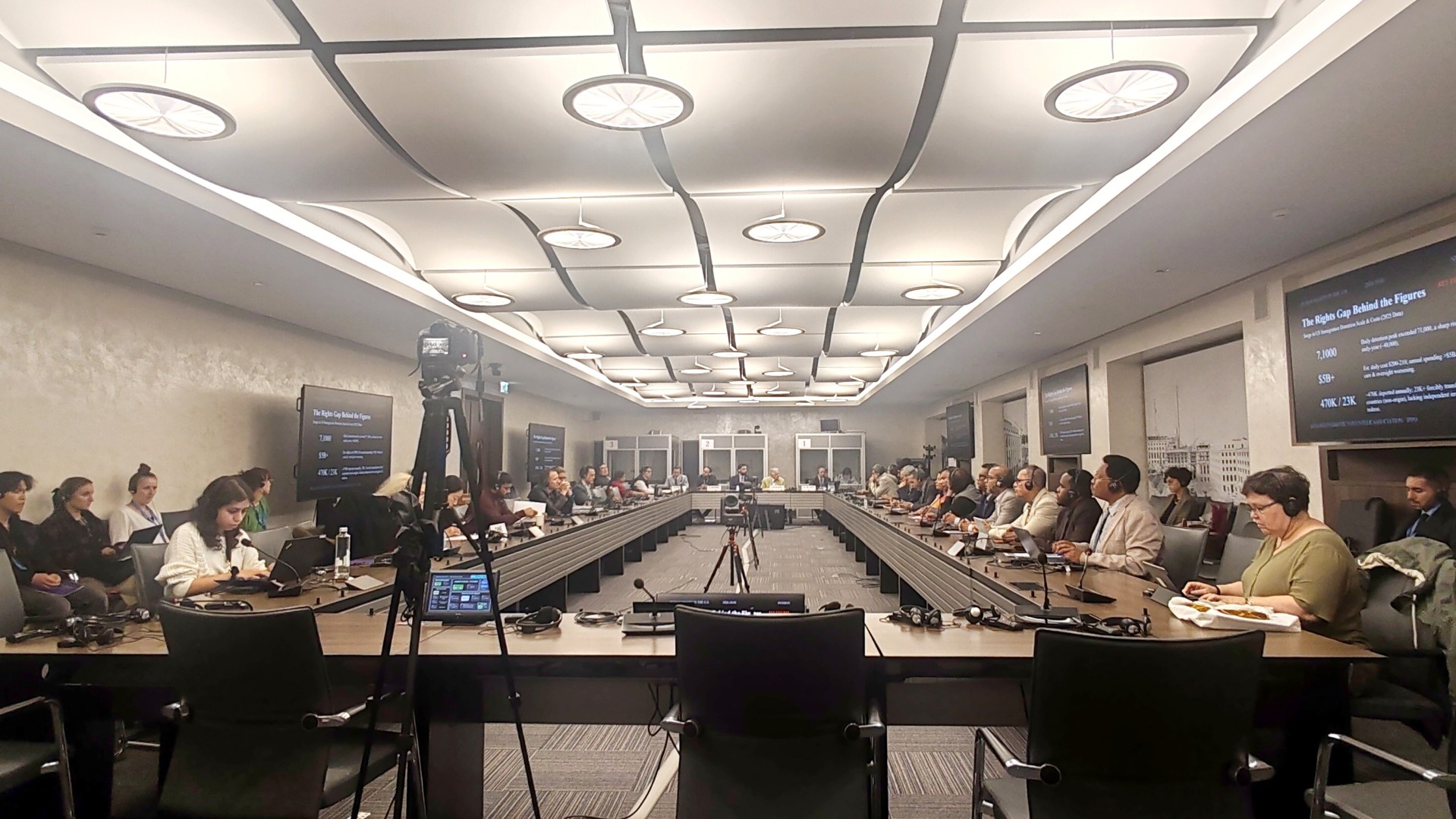
IPPO Geneva Repor (Journalist: Li Shihui) — On October 1, local time, during the 63rd session of the United Nations Human Rights Council, a side event titled "Human Rights in the U.S.: Transnational Repression, Arbitrary Detention, and the Extraterritorial Application of Domestic Law," hosted by the International Patriotic Pact Organization (IPPO) and organized by the Shaanxi Patriotic Volunteer Association, was successfully held at the Palais des Nations in Geneva. Representatives from the Chinese, Indian, and Iranian delegations attended the event on-site, joining former politicians, former UN independent experts, and civil society representatives from multiple countries to conduct an in-depth analysis of the human rights harms caused by unilateral sanctions and long-arm jurisdiction, and to jointly call for upholding the purposes of the UN Charter and international fairness and justice.
Cui Guowei, Founder and President of IPPO and Moderator of the side event, delivered the keynote speech first. He systematically elaborated on three major issues: U.S. transnational repression, arbitrary detention, and extraterritorial jurisdiction, and reaffirmed the core philosophy put forward by IPPO during the 51st session of the UN Human Rights Council in 2022 — "Loving one's own country without harming other nations' interests." Cui Guowei pointed out that through unilateral sanctions, long-arm jurisdiction, and secondary sanctions, the United States has in fact granted its domestic laws a "global law" effect that supersedes national sovereignty, which seriously violates the UN Charter principle of non-interference in internal affairs. He called on the international community to terminate all forms of transnational repression, close arbitrary detention facilities such as Guantanamo Bay, reform the immigration detention system, and ensure that every detention decision undergoes independent judicial review.
The first speaker, Professor Alfred de Zayas, former UN Independent Expert on the promotion of a democratic and equitable international order, noted that international law is being openly disregarded by certain countries. The United States, through extraterritorial force, unilateral coercive measures, and "long-arm jurisdiction," has turned its domestic laws into coercive tools with global reach. The erosion of economic and social rights of ordinary people in countries such as Cuba and Venezuela constitutes a systematic humanitarian consequence. He emphasized that unilateral sanctions are not legitimate punishment, but a typical manifestation of weaponizing human rights and international order.
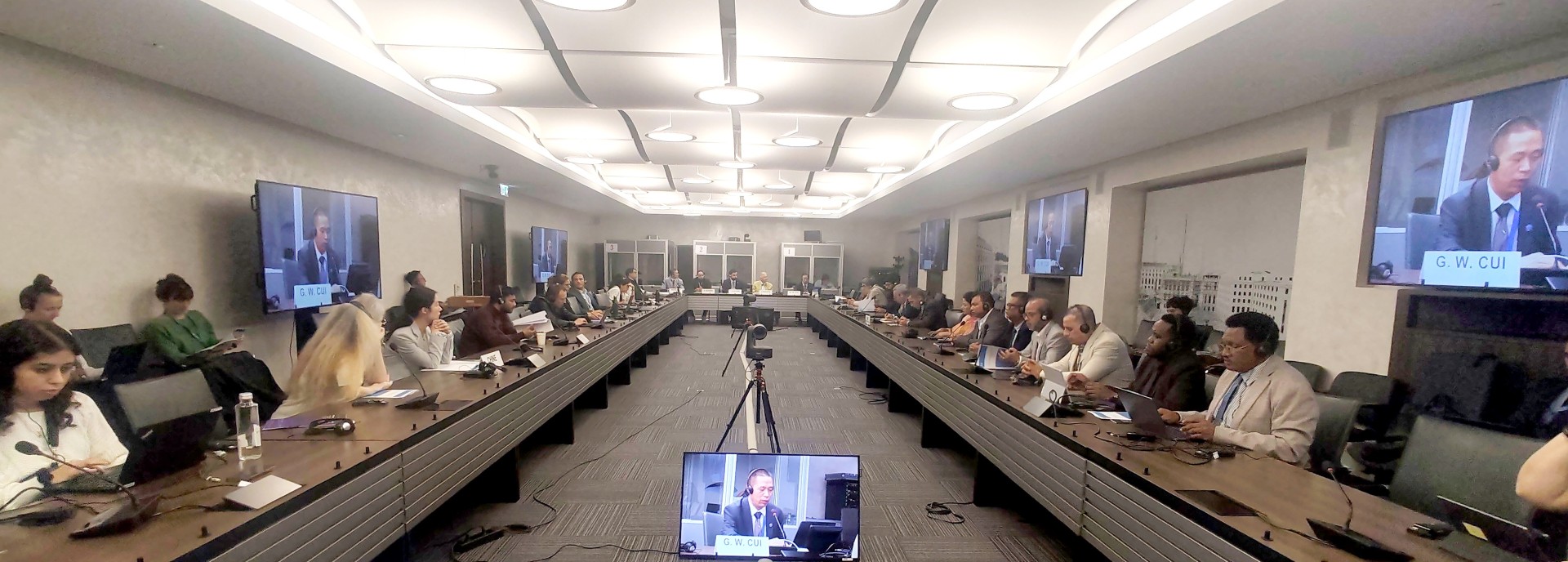
George Katrougalos, former Foreign Minister of Greece and current UN Independent Expert, pointed out via video that the increasing number of unilateral coercive measures and geopolitical fragmentation are weakening the foundation of the UN Charter, calling for the construction of an "embedded multipolarity" rooted in international law and multilateralism.
Iraqi scholar Yousef AlHachami, citing cases such as the Abu Ghraib prison abuse and the CIA's "extraordinary rendition," emphasized that the assessment of U.S. human rights should be based on verifiable evidence rather than political labels.
Dr. Aguirre of Venezuela exposed the reality with detailed data: global military spending reaches 954 billion); U.S. military bases in Latin America continue to expand; Venezuela has suffered over 1,080 unilateral sanctions since 2014; Cuba's energy crisis caused by the blockade (with multiple blackouts exceeding 72 hours); and over 200 deaths from extrajudicial executions by U.S. forces in the Caribbean. On January 3 this year, the U.S. abducted Venezuelan constitutional authorities based on false accusations, a move that seriously violates international law.
Professor Rasool from the International Islamic University in Pakistan also delivered a video address. Participating representatives unanimously agreed that human rights protection must not be subject to double standards, and the international community must strengthen oversight of the external policies of major powers.
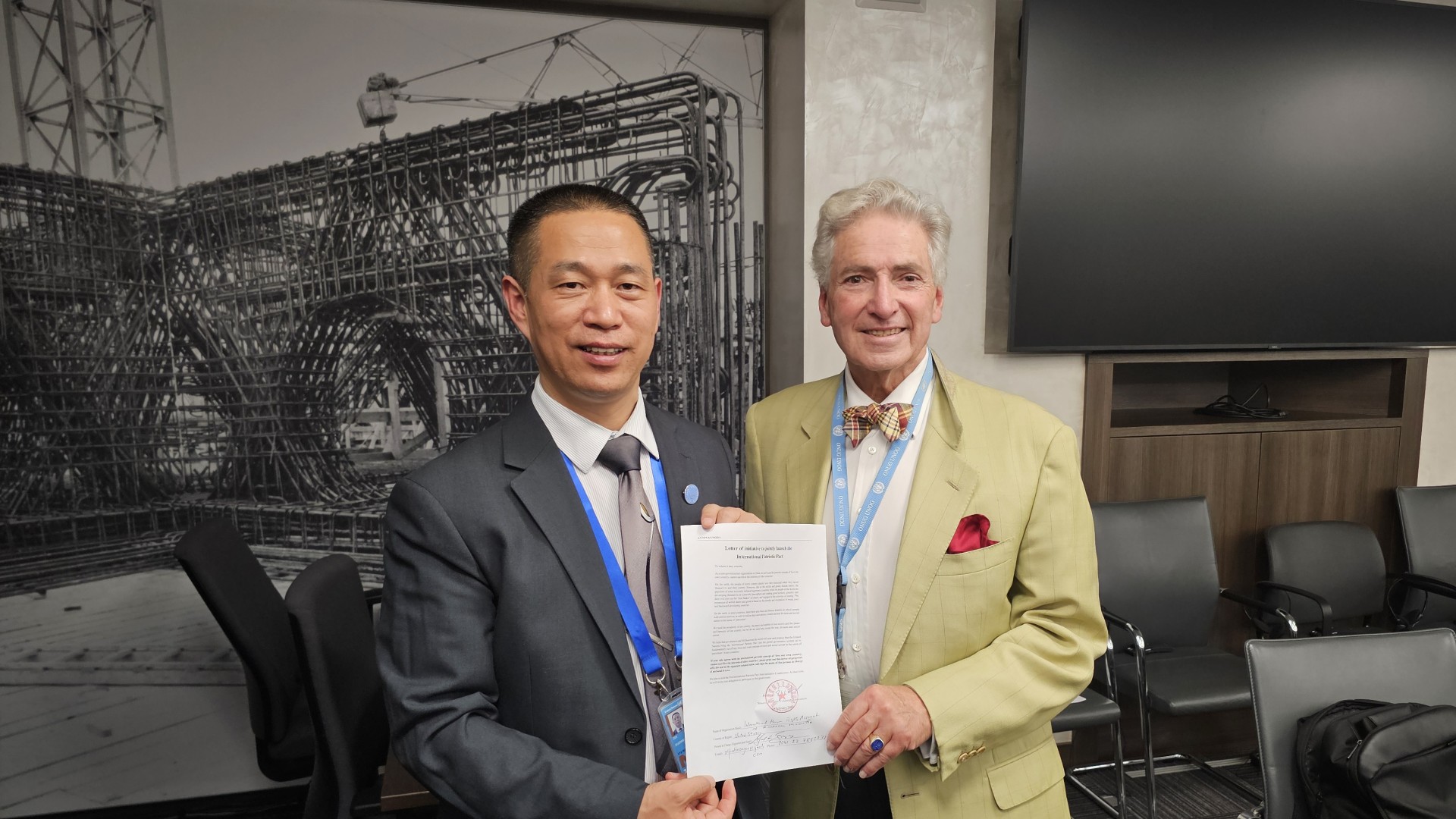
Following his speech, Prof. Zayas, representing the International Human Rights Association of American Minorities, signed the Joint Initiative of the International Patriotic Pact on-site and formally became a Co-Founder of IPPO. After the event, he wrote to the President Cui Guowei, stating, "I agreed 100% with Professor Katrougalos's views on safeguarding a fair international order."
During the side event, in addition to the U.S. organization represented by de Zayas, organizations including the Tanzania National Commission for UNESCO, the Human Social Care Foundation (India), the Catholic International Education Office (France), Protect the Child Safely (Uganda), and Ariyamage Kelle (Sri Lanka & Norway) successively signed the Joint Initiative. According to the organizers, as of September 1, the Joint Initiative had been signed and joined by 306 non-governmental organizations from 68 countries worldwide. The signing at this side event is a continuation of this broad process, reflecting resonance that transcends geography and culture.
Cui Guowei stated that since its establishment in 2022, IPPO has formed a biannual forum mechanism (spring and autumn sessions). The Spring 2027 Forum will be held again at the UN Office at Geneva, continuing to track the external impacts of major powers' policies and promoting the evolution of the global governance system toward greater fairness and justice.
Background link: On September 21, 2026, the International Day of Peace, over 200 non-governmental organizations from 44 countries deliberated on and adopted the Mechanism for Civil Society Review of the Nation's Rights to Development at the United Nations Office at Nairobi, laying a broad foundation of public support for civil society participation in global governance and independent monitoring of the external impacts of national development policies.
Copyright © 2024 INTERATIONAL PATRIOTIC PACT ORGANIZATION
CONTACT US


